
Vermiculite Insulation and Asbestos: What to Know Before an Attic Renovation
An attic renovation often starts with a practical goal: improve insulation, update wiring, repair a ceiling, or create more usable space.
But before contractors move materials or open up the area, there is one detail worth checking: what kind of insulation is already there?
If your home contains older vermiculite insulation, asbestos may need to be considered before the work begins. Discovering it does not automatically mean your entire home is contaminated or that every renovation must be cancelled.
It means the project needs an informed next step.
Understanding the insulation, arranging an appropriate assessment, and planning any necessary removal can help you move forward without turning an attic improvement into an avoidable disruption.
What is vermiculite insulation, and why is asbestos a concern?
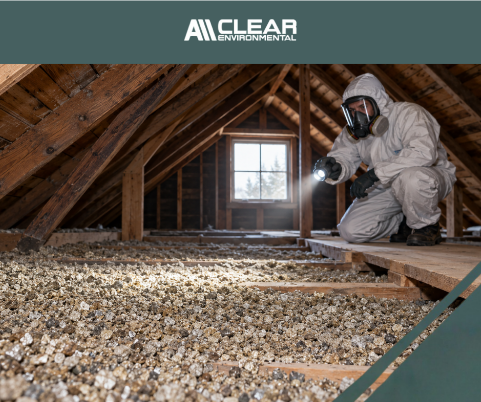
Vermiculite is a naturally occurring mineral that expands when heated. The expanded material is lightweight and resistant to fire, which made it useful as insulation.
Some older products came from deposits contaminated with asbestos. One important example is vermiculite from the Libby Mine in Montana, sold in Canada as Zonolite attic insulation.
However, not all vermiculite contains asbestos. The Canadian Centre for Occupational Health and Safety explains that contamination depends on the source of the material.
For homeowners, the practical takeaway is straightforward: finding vermiculite is a reason to arrange an assessment, not proof of a positive asbestos result. [1]
Do not base your renovation plan on an online photograph or a neighbour’s experience. Your property needs to be evaluated on its own circumstances.
Does vermiculite insulation always need to be removed?
Not necessarily. Health Canada distinguishes between disturbing asbestos-containing materials and leaving them isolated and undisturbed. Material in an attic that remains isolated presents a different situation from insulation that will be handled during construction. [2]
A renovation can change that situation.
Before choosing whether to leave insulation in place or arrange removal, discuss questions such as:
- Will contractors need to move through the insulated area?
- Will the project open ceilings beneath it?
- Is new wiring or ventilation planned?
- Will the insulation itself be replaced?
- Could the design be adjusted to avoid disturbing it?
- Will future maintenance require access to the same space?
These questions help define the project before a removal quotation is prepared.
The decision should follow a professional assessment of the material and the proposed work.
Planning an attic renovation? Check the insulation before work begins
An attic project involves more than the finished room or the new insulation layer. Electricians, roofers, insulation installers, and other trades may need access at different stages.
Give everyone the same information before scheduling work.
For example, a homeowner may describe a project as a simple insulation upgrade, while the contractor also plans to move existing material, access ceiling penetrations, or replace ventilation components. Those details matter when evaluating potential disturbance.
Prepare a short project outline that includes:
- The work you want completed
- The areas contractors will need to access
- Any planned ceiling or roof openings
- Whether existing insulation will remain
- Previous inspection or laboratory reports
- Your preferred construction schedule
Natural Resources Canada’s attic guidance specifically warns against disturbing vermiculite insulation. An energy-efficiency upgrade should therefore begin with checking existing conditions, rather than assuming the old material can simply be moved aside. [3]
If vermiculite has already been identified, speak with All Clear Environmental before authorizing work that could affect it.
Can testing confirm whether vermiculite contains asbestos?
Professional sampling and laboratory analysis help determine whether asbestos is present.
CCOHS recommends having a competent professional arrange testing before renovation work that could disturb suspected vermiculite insulation, with samples sent to an accredited laboratory. [1]
Vermiculite also presents a sampling challenge: asbestos contamination may be unevenly distributed. Federal technical guidance identifies this issue and explains why representative sampling requires particular care. [4]
This is why an informal sample from one convenient spot should not become the basis for your entire renovation decision.
If you already have a report, provide the full document to the professional reviewing the project. Ask:
- Which areas and materials were sampled?
- Does the report cover the insulation affected by this renovation?
- Are there limitations or recommendations?
- Is additional assessment needed before work begins?
A result is most useful when it can be connected to the actual work area and project scope.
Why DIY vermiculite removal can make the situation worse
Loose insulation may look easy to collect, especially when only a small section appears to be in the way.
However, asbestos-containing vermiculite should not be treated as ordinary renovation debris. Health Canada advises homeowners against removing it themselves and recommends hiring trained, qualified asbestos professionals. [5]
Moving suspect insulation just to make room for another contractor is still a disturbance. So is beginning demolition with the intention of dealing with the insulation later.
If suspected material is discovered unexpectedly, stop work affecting that area and seek professional guidance before continuing.
Avoid turning uncertainty into a cleanup project.
Until the material has been assessed, keep access restricted and explain the concern to anyone scheduled to work nearby. Health Canada also advises against using an attic containing vermiculite insulation for storage and recommends keeping children out. [2]
What happens during professional vermiculite insulation removal?
The scope varies between properties. Homeowners should expect a project-specific plan and clear explanations of the work included.
The following stages provide a useful framework for discussing the quotation.
1. Reviewing the property and renovation plans
The starting point is understanding where the insulation is located and how the planned renovation will affect it.
Share available reports, previous findings, and the construction scope. Explain whether you are replacing insulation, altering ceilings, or preparing the attic for a different use.
Ask the contractor to identify what the quotation covers and what remains outside its scope. This helps avoid confusion between asbestos abatement and subsequent building work.
2. Defining the work area and access arrangements
Discuss how workers will reach the attic and how the work area will be separated from other parts of the home.
All Clear Environmental describes isolation and containment as part of its vermiculite removal process. [6]
Before the start date, ask which areas will be unavailable and whether any household preparations are needed. Do not move potentially contaminated belongings yourself to prepare the space.
Confirm who will provide instructions and who will be your contact during the project.
3. Establishing appropriate work procedures
The contractor should explain the controls appropriate to the removal operation, including worker protection and measures to limit the spread of contamination.
Ontario’s asbestos framework sets requirements for construction and repair operations involving asbestos-containing materials. The procedures depend on the work being performed. [7]
Ask how those requirements apply to your project rather than assuming every attic requires an identical setup.
Occupancy arrangements should also be discussed in advance. Whether parts of the home can remain in use depends on the assessment and work plan.
4. Removing and handling the affected insulation
Professional removal follows the agreed scope, with controlled handling of the insulation and appropriate waste arrangements.
All Clear Environmental includes careful removal and proper disposal in its published service process. [6]
For the homeowner, an important question is whether the quotation includes the complete agreed removal area and all associated waste handling.
Avoid requesting informal shortcuts, such as leaving an affected section for another trade to remove later. Any change in scope should be discussed with the responsible professionals.
5. Cleaning and completing the applicable checks
Removal is followed by the cleaning and completion procedures specified for the project.
Ask what inspections, air testing, or other checks apply, who performs them, and what documentation you will receive. Do not assume a visual check alone covers every completion requirement.
Obtain a clear explanation of the conditions that must be met before containment is dismantled or other contractors return.
The handover should identify the work completed and any remaining restrictions or recommendations.
6. Coordinating the next stage of renovation
Do not schedule insulation installation or interior construction on an assumed completion date without confirming the handover arrangements.
Ask who will notify your renovation contractor when the area is ready for the next phase.
Also clarify whether new insulation, repairs, and finishing work are included in the quotation or require separate contractors. These are practical budget questions that are easier to resolve before the project begins.
What should you ask before approving a quotation?
A useful quotation should let you understand the proposed work, not just compare a final price.
Before proceeding, confirm:
- The areas included in the removal scope
- The reports or assessment informing the plan
- Access and occupancy arrangements
- Waste handling and disposal
- Cleaning and applicable completion checks
- Documentation supplied at handover
- Exclusions and possible changes to the scope
- Coordination with your renovation contractor
If you are also researching budget factors, read our guide to vermiculite insulation removal costs in Canada.
Use that information to prepare questions, then request an assessment for your property.
Found vermiculite before an attic renovation? All Clear Environmental can help
Discovering older insulation does not have to leave your renovation plans uncertain.
All Clear Environmental provides professional vermiculite insulation removal and asbestos removal services for residential and commercial properties.
Already have an inspection or laboratory report? Share it with us alongside your renovation plans so we can better understand the work you are preparing to undertake.
Before disturbing vermiculite insulation, make an informed plan.
Contact All Clear Environmental to discuss your property and request an estimate.
Sources
- [1] Canadian Centre for Occupational Health and Safety: Vermiculite Insulation Containing Asbestos – https://www.ccohs.ca/oshanswers/diseases/vermiculite.html
- [2] Health Canada: Asbestos and your health – https://www.canada.ca/en/health-canada/services/air-quality/indoor-air-contaminants/health-risks-asbestos.html
- [3] Natural Resources Canada: Keeping The Heat In, Section 5, Roofs and attics – https://natural-resources.canada.ca/energy-efficiency/home-energy-efficiency/keeping-heat-section-5-roofs-attics
- [4] Government of Canada: Technical guideline to asbestos exposure management programs – https://www.canada.ca/en/employment-social-development/services/health-safety/reports/asbestos-exposure-management-programs.html
Used for the technical point about uneven distribution and representative sampling, not as a statement of Ontario residential legal requirements. - [5] Health Canada: Pollutants from furniture and building materials – https://www.canada.ca/en/health-canada/services/home-garden-safety/pollutants-furniture-building-materials.html
- [6] All Clear Environmental: Vermiculite Insulation Removal – https://allclearenvironmental.ca/vermiculite-insulation-removal/
- [7] Government of Ontario: Asbestos in the workplace – https://www.ontario.ca/page/asbestos-workplace